
SPORTS IN THE CIVILIZING MISSION

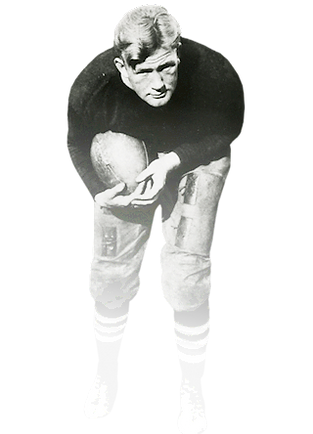

Carlisle Indians Football Team: Indigenous Excellence in the Face of Colonial Violence

The Carlisle Indian Industrial School stands as one of the most revealing examples of the contradictions embedded within the United States’ system of Indian Industrial Schools—institutions designed to erase Indigenous cultures under the guise of assimilation. Yet within this oppressive environment, Carlisle’s football program emerged as a powerful and unexpected site of Indigenous resilience and visibility. Competing against elite programs like Harvard University and Syracuse University, the Carlisle Indians achieved remarkable success, at one point posting a 23–2–1 record and producing legendary athletes such as Jim Thorpe. This exhibit explores how football became a medium through which Indigenous athletes asserted agency and challenged dominant narratives, transforming the field into a space not only of competition—but of resistance.
Sports at the Carlisle School
At the Carlisle Indian Industrial School, sports were deliberately used as tools of cultural assimilation, promoting Euroamerican values while suppressing Native identities. Athletics were framed as a way to instill discipline, teamwork, and competitiveness in line with dominant American ideals. Students were encouraged, and often required, to participate in organized sports that emphasized obedience to authority and conformity to structured rules, mirroring the broader goals of the school’s assimilationist agenda. Carlisle’s football team showcased Native students excelling within a Euroamerican framework. However, while sports provided some students with opportunities for recognition and mobility, they also functioned as a means of reinforcing cultural erasure. In this way, athletics at Carlisle operated not merely as recreation but as a strategic extension of federal policies aimed at reshaping Native American identity.
Artifacts From the Carlisle School

Carlisle Indian School Employees. 1886
A ledger containing names, positions, and salaries of employees at the Carlisle School. Annual wages adjusted for inflation range from $20,000-$50,000.

Image of George Hollow Horned Bear in school uniform, listed as George Bull. 1881
Format: photographic print
No photographer listed
Stereograph Photographs

Former Fort Marion Prisoners. 1879
Format: Glass plate negative, Stereograph
Photographer: John N. Choate, Carlisle, PA
Fort Marion acted as an incarceration site for indigenous prisoners during the Seminole War. 8 young men are depicted here, taken from one prison only to be brought to another.

Image of the first class of male students (Sioux Nation). 1879
Superintendent Richard Henry Pratt (far left) started the school in 1879 until his forced departure in 1904. The cause for his removal was described as disputes with the Government regarding his methods and civil service.
Format: Glass plate negative, Stereograph
Photographer: John N. Choate, Carlisle, PA
Sports Artifacts


Annual Football Banquet Program 1902
This handmade program details the school’s annual banquet celebrating the Carlisle Indian Football Team’s 1902 season. The program makes mention of coach “POP” Warner, credited for helping the team achieve a grand 200 point lead against other teams in the area.
Jim Thorpe's Football Helmet 1912
This is a game-worn helmet worn by Jim Thorpe during the Carlisle Indian School's 1912 season. This helmet is currently held at auction, appraised at $6,600.

A Deeper Dive
CLICK ME!

The following graphs present demographic information for approximately 250 students who attended the Carlisle School. Most of these students were taken from Indigenous communities in the Southwest and Pacific Northwest, including Apache, Pueblo, Sioux, and Alaska Native nations. This uneven representation reflects the school’s role in removing children from distant communities. It is also important to note the relative absence of students from nations in the school’s surrounding region, which points to long-lasting, violent displacement and disruption of Indigenous peoples along the East Coast.
The following timelines place football game records for the Carlisle School (blue) in relation to competing schools (orange). Beginning in 1904—coincidentally the same time that Jim Thorpe began attendance at the school—the Carlisle Indians Football Team’s win records trended above competing schools like Harvard and Syracuse. From one perspective, the team’s success offered an example of Indigenous excellence in an environment where Indigenous identity was and viewed as inferior to whiteness. At the same time, the nature of finding success in a white man’s sport served as a tool to affirm the school’s mission to “kill the Indian” and “save the man”.
CLICK ME!
Works Cited
Adams, David Wallace. “More than a Game: The Carlisle Indians Take to the Gridiron, 1893-1917.” The Western Historical Quarterly 32, no. 1 (2001): 25–53. https://doi.org/10.2307/3650836.
Bloom, John. “The Imperial Gridiron: Dealing with the Legacy of Carlisle Indian School Sports.” In Carlisle Indian Industrial School: Indigenous Histories, Memories, and Reclamations, edited by Jacqueline Fear-Segal and Susan D. Rose. University of Nebraska Press, 2016. https://doi.org/10.2307/j.ctt1dwssxz.12.
Bloom, John. “‘Show What An Indian Can Do’: Sports, Memory, and Ethnic Identity at Federal Indian Boarding Schools.” Journal of American Indian Education 35, no. 3 (1996): 33–48. http://www.jstor.org/stable/24398295.
“Welcome.” Welcome | Carlisle Indian School Digital Resource Center. Accessed May 1, 2026. https://carlisleindian.dickinson.edu/index.php/.